


High Court Rules Against Granting Citizenship to Child of Foreigner Born in Maldives
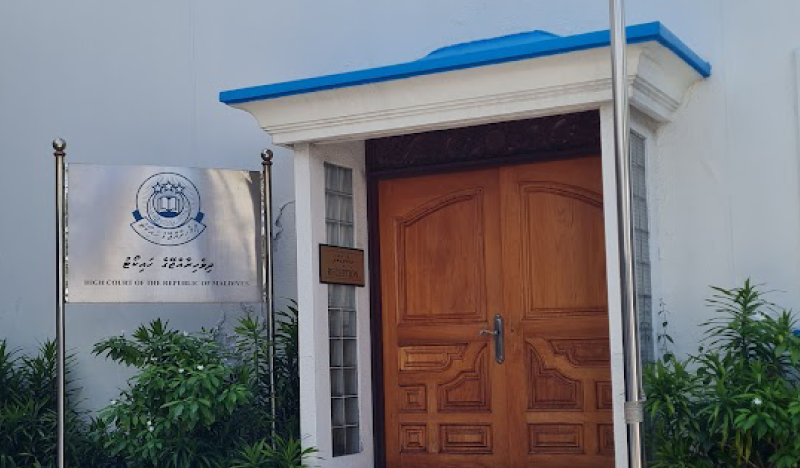
Photo: Ibrahim Mahudhy
The High Court has ruled against the prosecution’s plea to confer Maldivian citizenship upon a child born to an Indonesian woman who married a Maldivian man in Sri Lanka and gave birth in Maldives.
The case, which revolved around the child’s nationality and citizenship, stemmed from complex circumstances involving the child’s birth and the legal status of the parents.
advertisement
advertisement
advertisement

The case unfolded with the birth of the Indonesian woman’s child on September 9, 2007, at the Indira Gandhi Memorial Hospital (IGMH). The woman had married a Maldivian man in Sri Lanka on April 19, 2007, four months before the child’s birth.
The marriage was officially registered in the Maldives on January 5, 2008, after the birth of the child.
Following the birth, the child’s mother left the Maldives to renew her passport, leaving the infant behind. Despite efforts by authorities, she has not been located since her departure.
Subsequently, a temporary birth certificate was issued for the child on May 30, 2010, but a permanent certificate couldn’t be issued due to the lack of lineage verification. As a result, the child, now 16 years old, has been in a state of legal limbo.
The child initially stayed with the mother of the Maldivian man her mother married in Sri Lanka. However, in 2012, the family filed a complaint with the Gender Ministry, stating their inability to continue caring for the child.
Consequently, the ministry took the child into custody as there was no legal relationship established between the child and the Maldivian man or any family member.
The case was referred to the Family Court but was subsequently dismissed, which lead to the the prosecution, contending that the child’s nationality was undetermined due to the absence of a permanent birth certificate or Maldivian citizenship, then appealed to the High Court. They sought to grant Maldivian citizenship to the child, emphasising the child’s lack of national belonging and associated rights.
However, the High Court majority, in a 2-1 ruling, supported the decision made by the Family Court to dismiss the case, stating that the matter did not fall within the Family Court’s jurisdiction.
Presiding Justice Ahmed Salim clarified that the Family Court isn’t authorised to handle cases related to proof of descent. He highlighted that the conditions for Maldivian citizenship were not applicable to this child’s circumstances as per the Maldivian laws and Constitution.
Another judge, Justice Niyaz, shared similar views, citing the conditions stipulated in Islamic Shariah and the Family Act. Justice Niyaz pointed out the lack of biological relation between the child and the Maldivian man she was assumed to be associated with, given the circumstances of the marriage.
Justice Huzaifa Mohamed, in a dissenting opinion, emphasised the importance of considering the child’s rights and advocated for further examination of the matter.
The situation of this child remains unresolved, prompting a broader conversation on legal and humanitarian considerations in similar cases.