


Most Reef Damage Fines in Maldives Still Unpaid, Says EPA
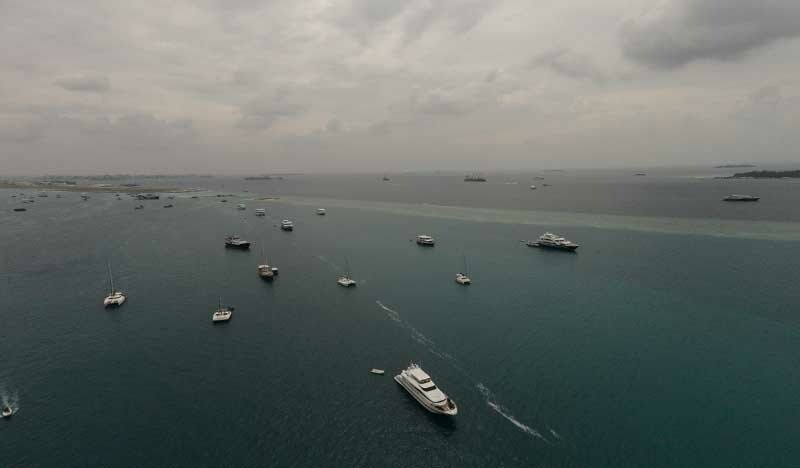
The Environmental Protection Agency (EPA) has revealed that only two major fines issued for marine vessels running aground on coral reefs in the Maldives have been paid to date.
The matter was discussed during a recent meeting of the Parliament’s Environment and Climate Change Committee, where members highlighted a lack of accountability from relevant institutions. Authorities have reportedly been summoned twice in February last year to address the issue, but committee members noted that no satisfactory response has been received.
advertisement

advertisement

advertisement

According to details shared during the committee session, a total of 51 fines have been issued in connection with vessels damaging reefs across the country. However, the majority of these penalties remain unpaid, and 21 cases are still under investigation. Some of the unresolved cases date back as far as eight years.
The EPA noted that many of the fines involved comparatively modest sums, ranging between MVR 400,000 and MVR 500,000. Nonetheless, only two high-value fines have so far been successfully collected.
One of the paid fines was linked to an incident involving a beach barge that ran aground near Sh. Noomara in 2019. The fine, totalling MVR 61 million, was paid in 2022—three years after the incident. The other payment concerned damage to the reef at K. Rasfari in 2021, for which a fine of MVR 154 million was settled within four months. This remains the highest amount collected by the EPA in such cases.
EPA Director General Ibrahim Naeem said that restoration efforts are underway in one of the affected reef areas using funds from the collected fines, although he did not disclose the specific location. He added that due to changes in reef ecosystems, certain types of damage cannot be naturally reversed and require active rehabilitation efforts. These are typically undertaken only after fines have been paid.
Naeem also raised concerns regarding vessels that remain grounded for extended periods. He explained that environmental damage assessments and fines can only be issued once a vessel is removed from the reef. Delays in removal, therefore, hinder the enforcement of penalties and contribute to further complications.
He also pointed out that a previous regulation, which controlled the movement of vessels in reef areas, is no longer in force. The absence of such a regulation, he said, increases the risk of further incidents.